




What to Look For in a Fertility Supplement: A Label-by-Label Buyer's Guide
The fertility supplement aisle rewards confident packaging more than it rewards good formulation. Two bottles can carry nearly identical front-label promises while differing enormously in what is actually inside: the form of folate, whether doses are disclosed at all, whether the botanicals were verified for identity, and whether any independent lab has confirmed that the contents match the panel. Because dietary supplements are not reviewed by the FDA before they reach the shelf, that verification gap falls to the person holding the bottle.
This guide walks through what to evaluate, in the order that matters. It covers the baseline nutrients a preconception formula should deliver, how to read a Supplement Facts panel for form and dose, how to check manufacturing quality, how to match a formula to your own cycle history, and which marketing claims carry no regulatory meaning at all.
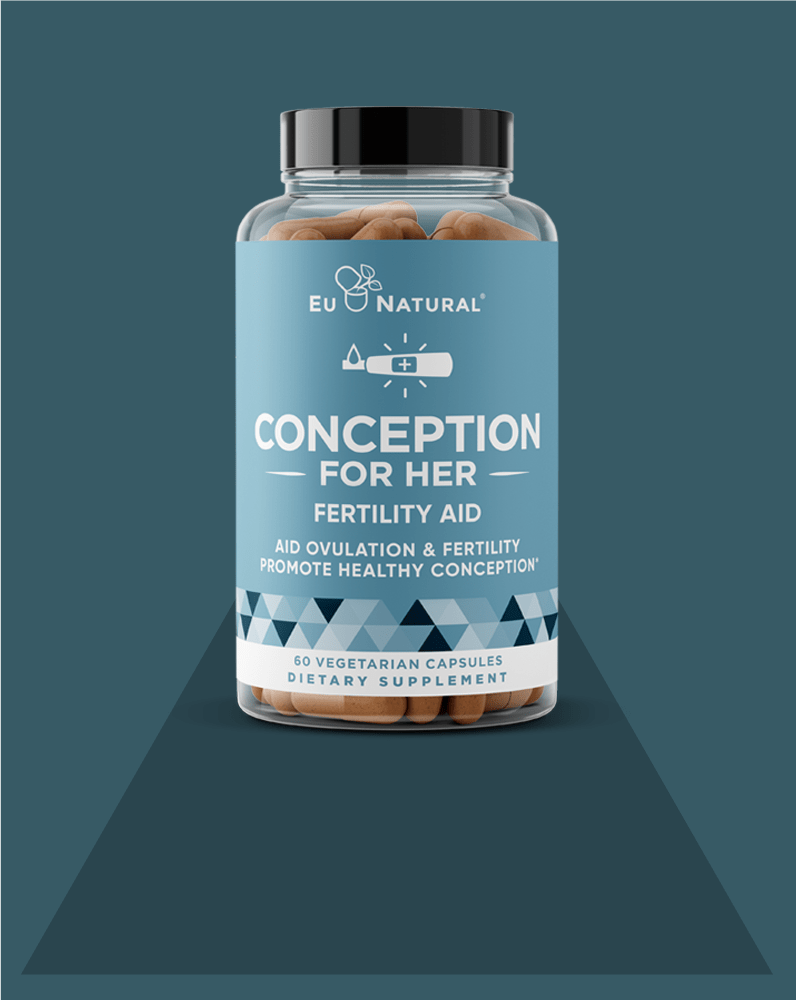
Conception for Her is a dietary supplement. It is not approved by the FDA to diagnose, treat, cure, or prevent any medical condition, including infertility. Individual results vary, and this guide is not a substitute for advice from a licensed healthcare provider.
What this guide covers:
1. The Baseline: What Every Fertility Formula Should Cover
2. Ingredient by Ingredient: What the Evidence Actually Supports
3. Reading the Supplement Facts Panel: Form, Dose, and Disclosure
4. Verifying Quality: Testing, Manufacturing, and Traceability
5. Matching the Formula to Your Situation and Your Timeline
6. Red Flags and Claims Worth Discounting
7. Frequently Asked Questions
1. The Baseline: What Every Fertility Formula Should Cover
Before comparing botanical blends, confirm the formula handles the fundamentals. These are the elements with the strongest consensus behind them, and a product that misses them is not worth evaluating further no matter how compelling the rest of the label looks.
Folate at a Meaningful Dose
The CDC, ACOG, and the U.S. Preventive Services Task Force all recommend that anyone who could become pregnant take 400 to 800 mcg of folic acid daily, and that this begin at least one month before conception.1 Any fertility formula worth considering should meet that threshold on its own or make clear that it is meant to be paired with something that does.
On the form question, it is worth being precise rather than dogmatic. L-methylfolate is the bioavailable form the body uses without conversion, which is why many preconception formulas favor it. The CDC's own position, however, is that people with MTHFR variants process folic acid effectively and that total folate intake matters more than genotype.1 A randomized trial in women with recurrent miscarriage found no outcome advantage for 5-MTHF over folic acid, regardless of C677T or A1298C status.2 The practical takeaway: prioritize hitting the dose, and treat methylfolate as a reasonable preference rather than a requirement.
Vitamin D, Iodine, and the Micronutrient Floor
Vitamin D receptors are present in reproductive tissue, and correcting a deficiency is the context in which supplementation appears most useful. Iodine, selenium, and zinc support thyroid and endocrine function, which sits upstream of ovulation. None of these is a fertility intervention on its own. They are the floor a formula stands on.
A Vitamin A Level That Respects the Upper Limit
This is the one place where more is actively worse. The tolerable upper intake level for preformed vitamin A (retinol and retinyl esters) is 3,000 mcg RAE per day for adult women, set specifically on the basis of teratogenic risk.3 Beta-carotene does not carry that risk because conversion is self-regulating. Check the panel and confirm that any preformed vitamin A sits well under the limit, especially if you are stacking products.
2. Ingredient by Ingredient: What the Evidence Actually Supports
The honest summary of the research is that no supplement has been shown to reliably improve fertility on its own. A 2025 umbrella review found that while myo-inositol, CoQ10, vitamin D, melatonin, NAC, and L-carnitine were each associated with higher clinical pregnancy rates in specific populations, the certainty of that evidence was very low, and the authors concluded the available data are insufficient to recommend supplementation broadly.4 That does not make these ingredients pointless. It means you should look for ingredients with a plausible mechanism and a defined population, and be skeptical of any label implying more than that.
| Ingredient | What the Evidence Supports | What to Check on the Label |
|---|---|---|
| Myo-Inositol | The strongest case in the category, concentrated in PCOS-related ovulatory dysfunction and insulin resistance. Associated with improved clinical pregnancy rates in ovulation induction, though certainty remains low. | Whether the dose is disclosed, and whether D-chiro inositol is included at a physiologic ratio rather than as a trace amount. |
| Folate (L-Methylfolate or Folic Acid) | The one ingredient with unambiguous, guideline-level support, for neural tube defect prevention rather than conception itself. | 400 to 800 mcg, and whether the amount is listed in mcg DFE. |
| CoQ10 | Studied for oocyte mitochondrial function, with the most encouraging signals in women over 35 or with diminished ovarian reserve. Trials are small and dosing is not settled.6 | Present at a real dose if egg quality is your focus. Many combination fertility formulas omit it entirely. |
| Vitamin D | Most relevant when correcting a documented deficiency. Results in replete women are inconsistent. | The amount, and whether it duplicates what you already take. |
| Chaste Tree Berry (Vitex) | Acts on prolactin and progesterone. Traditional dosing for ovulatory support is roughly 500 to 1,000 mg of dried berry daily, given for three to six months.7 | Whether the dose falls in a studied range, and whether it is disclosed at all. |
| KSM-66 Ashwagandha | An adaptogen used for stress load rather than a direct fertility mechanism. Clinical trials typically use 300 mg once or twice daily.8 | The branded extract name and the standardized dose, not just "ashwagandha." |
| Antioxidant Minerals (Zinc, Selenium, Manganese) | Supportive of thyroid and endocrine function. Pooled antioxidant data show no effect on miscarriage or ectopic pregnancy rates. | That amounts stay within sensible ranges rather than competing on megadoses. |
| Absorption Enhancers (BioPerine) | Improves uptake of certain micronutrients. A formulation detail, not an active benefit. | Presence is a mild positive. Treat it as a tiebreaker, not a selling point. |
3. Reading the Supplement Facts Panel: Form, Dose, and Disclosure
The front label is marketing. The back panel is the product. Three things there tell you most of what you need to know.
Disclosed Doses, Not Proprietary Blends
A proprietary blend lists a combined weight for several ingredients without breaking out individual amounts, which makes it impossible to know whether the ingredient you care about is present at a studied dose or as a pinch of label decoration. Consumer testing organizations flag this directly: blends and "complexes" are often named to evoke a headline ingredient while containing very little of it.5 If the panel does not tell you how much Vitex or myo-inositol you are getting, you cannot evaluate the formula, and neither can your doctor.
Form, Not Just Name
Two labels can both say "folate" and deliver different molecules. The same applies to magnesium, zinc, and botanical extracts, where a standardized branded extract (KSM-66, for example) tells you what was actually studied while a generic herb name tells you almost nothing about potency or plant part.
Capsule Count Math
Check the serving size before comparing doses across products. A formula delivering an impressive ingredient list across six capsules per day is a different proposition than one delivering a leaner list in two, both in adherence terms and in cost per month. Eu Natural's Conception for Her, for reference, uses a 2-capsule daily serving with a recommended 1-capsule adjustment period during the first two weeks.
4. Verifying Quality: Testing, Manufacturing, and Traceability
Because there is no pre-market FDA review, independent verification is the only mechanism confirming that the contents match the label. Not all quality language carries the same weight, and some of it carries none.
| Signal | What It Verifies | What It Does Not Tell You |
|---|---|---|
| USP Verified | Identity, strength, purity, and that the product will dissolve properly. | Whether the formula works for fertility specifically. |
| NSF Certified | Label accuracy, purity, and manufacturing conditions. The Certified for Sport tier also screens banned substances. | Efficacy, and it is uncommon on botanical fertility formulas. |
| cGMP, FDA-Registered Facility | That the manufacturing site follows Good Manufacturing Practice requirements. | Anything about the finished batch. Facility registration is not product testing. |
| Batch-Specific Certificate of Analysis | Heavy metals, microbial contaminants, and potency for the specific lot in your hand. | Little, provided the lab is named and the test date is current. This is the strongest practical signal. |
| Botanical Identity Verification | That the herb in the capsule is the species on the label, which matters most for botanical blends. | Potency, unless paired with standardization data. |
| "Lab tested," "pharmaceutical grade," "clinically proven" | Nothing. None of these phrases has a regulatory definition. | Everything. Treat unattributed testing claims as marketing copy. |
The practical version: look for a lot number on the bottle, a named third-party lab, and a dated certificate of analysis you can actually request. A brand that will not produce one has told you something useful.
5. Matching the Formula to Your Situation and Your Timeline
The right formula depends less on rankings than on which version of the problem you are solving.
- Irregular cycles or PCOS: Prioritize myo-inositol at a disclosed dose, with hormonal support ingredients like Vitex as a secondary consideration. This is where the evidence base is deepest.
- Regular cycles, general preconception support: A folate-forward formula with a solid micronutrient base may be all you need. Botanical blends aimed at cycle irregularity are a mismatch if your cycles are already predictable, and some women notice cycle changes they did not want.
- Age 35 and up, focused on egg quality: CoQ10 becomes worth seeking out specifically. This is the one clear gap in Conception for Her: it is built around cycle regularity and hormonal balance rather than mitochondrial support, so a separate CoQ10 supplement is a reasonable addition for this group.
- Already taking a prenatal or multivitamin: Compare panels before stacking. Duplicating vitamin D, zinc, iodine, and B vitamins across two products is the most common way people quietly exceed sensible intakes.
- Trying as a couple: Male factor contributes to roughly half of couples' fertility challenges, so a partner formula belongs in the plan rather than as an afterthought.
Give It Three Months Before You Judge It
Follicular development runs on roughly a 90-day arc, from recruitment of a dormant follicle through to ovulation. Nutrient concentrations in tissue take a comparable stretch to stabilize. Any product promising results in two weeks is describing something other than reproductive physiology, and any evaluation you make before three consistent cycles is premature.
6. Red Flags and Claims Worth Discounting
- Guaranteed or implied pregnancy outcomes. No supplement can make this claim legitimately, and formulas that gesture at it are signaling their marketing budget, not their formulation.
- Proprietary blends covering the ingredients you are actually buying the product for.
- No lot number, no named lab, or a testing claim with no attached document.
- Preformed vitamin A near or above 3,000 mcg RAE, particularly if you are also taking a prenatal.
- Botanicals listed without plant part, extract ratio, or standardization.
- Urgency pricing and countdown-driven bundles, which correlate with everything above more often than not.
- A formula that does not tell you when to stop. Botanical conception formulas are built for the trying-to-conceive phase and should give way to a dedicated prenatal after a positive test.
7. Frequently Asked Questions
Does a fertility supplement replace a prenatal vitamin?
Not usually, and the two are built for different phases. A conception formula is designed for the pre-pregnancy window, where the goal is hormonal balance and cycle support alongside baseline nutrition. A prenatal is built for pregnancy nutritional demands. Some conception formulas are complete enough to function as a pre-prenatal on their own, which is worth confirming on the panel rather than assuming, and stacking both risks duplicating nutrients.
Is a longer ingredient list better?
No. A 30-ingredient formula that discloses nothing is worse than a 15-ingredient formula with every dose printed. Ingredient count is the easiest specification to inflate and the least informative one to compare.
How much should I expect to pay?
Price tracks verification more than it tracks ingredient count. Batch testing, botanical identity confirmation, and standardized branded extracts all cost more than generic bulk sourcing, and that difference shows up at retail. What is not worth paying for is packaging, urgency, or an unverifiable claim.
Can I take a fertility supplement if I am already in treatment?
Talk to your care team first. Botanicals that act on prolactin or progesterone, Vitex in particular, can interact with the hormonal medications used in fertility treatment, and your clinic will want to know exactly what you are taking. The same applies if you have a thyroid condition, since iodine and selenium are common in these formulas.
What if nothing changes after three months?
That is the point to bring a healthcare provider into the conversation rather than to switch brands and restart the clock. Persistent cycle irregularity after a full three-month trial is clinical information, and it is more useful in a doctor's office than in a shopping cart.
Looking for a formula that meets these criteria?
Shop Conception for Her at eunatural.com
References
1 Centers for Disease Control and Prevention. MTHFR Gene Variant and Folic Acid Facts. cdc.gov/folic-acid/data-research/mthfr/index.html
2 Cochrane-indexed randomized controlled trial: Methyltetrahydrofolate vs Folic Acid Supplementation in Idiopathic Recurrent Miscarriage with Respect to MTHFR C677T and A1298C Polymorphisms. PMC4668025.
3 European Food Safety Authority. Scientific Opinion on the Tolerable Upper Intake Level for Preformed Vitamin A and Beta-Carotene. PMC11154838. See also NIH Office of Dietary Supplements, Dietary Supplements and Life Stages: Pregnancy.
4 The Role of Nutrient Supplements in Female Infertility: An Umbrella Review and Hierarchical Evidence Synthesis. PMC11722770.
5 ConsumerLab. Vitamin and Supplement Red Flags: What to Watch Out For When Buying Vitamins and Supplements.
6 Exploring the Protective Effects of Coenzyme Q10 on Female Fertility. PMC12425901.
7 Vitex: Dosing and Clinical Application Overview. ScienceDirect Topics, Immunology and Microbiology.
8 Ninety-Day Repeated Dose Toxicity of Ashwagandha (Withania somnifera) Root Extract. PMC10497735.


