











If you've seen headlines about declining birth rates and wondered what they mean for your personal conception journey, you are not alone. It’s easy to feel a sense of anxiety when faced with these large-scale statistics. But here is the truth: population statistics tell us about society's choices, not your body's potential.
This guide is here to walk you through what the total fertility rate (TFR) actually measures, explore the real reasons it’s declining, and most importantly, share the science-backed steps you can take right now to support your own fertility health, regardless of what demographic trends show.
In this article, you will learn:
-
What TFR measures and why it doesn’t predict your individual ability to conceive.
-
The real, controllable factors that influence your personal conception success.
-
Evidence-based nutrition, lifestyle, and supplement strategies that can support your fertility journey.
Total Fertility Rate Trends: What a Decade of US Data Reveals
A look at the last decade of US fertility data shows a period of gradual decline followed by stabilization. This trend reflects shifting societal priorities rather than a biological crisis, highlighting a move toward more intentional, later-in-life family planning.
US Total Fertility Rate 2026
|
Year |
US Total Fertility Rate (TFR) |
% Change from Previous Year |
Key Trend/Milestone |
|
2016 |
1.822 |
-1.1% |
Continued post-recession decline |
|
2018 |
1.732 |
-1.7% |
Decline accelerates slightly |
|
2020 |
1.642 |
-4.1% |
COVID-19 pandemic impact |
|
2022 |
1.672 |
+0.6% |
Slight post-pandemic rebound |
|
2023 |
1.622 |
-3.0% |
Lowest rate recorded |
|
2024 |
1.622 |
0.0% |
Stabilization at the new baseline |
|
2026 |
(Proj.) ~1.61 |
-0.6% |
Trend of stability expected to continue |
Key Research Findings from the US Data:
-
A Trend of Stabilization: After dropping to 1.62 in 2023 (the lowest recorded rate), the TFR stabilized in 2024 and projections show continued stability through 2026. This isn't a biological crisis, it reflects predictable responses to economic pressures, pandemic disruption, and generational shifts in family planning priorities.
-
Small Fluctuations Reflect Societal Shifts: The pandemic dip in 2020 (-4.1%) and modest rebound in 2022 (+0.6%) demonstrate that TFR responds to external conditions like economic uncertainty and social disruption, not declining reproductive capacity.
-
The US Rate Remains Robust Compared to Peers: While the US rate sits below replacement level, it remains significantly higher than many developed nations, South Korea (0.72), Spain (1.16), Italy (1.24), showing comparatively resilient family-building patterns.1
What Total Fertility Rate Actually Measures
The Total Fertility Rate (TFR) is a demographic snapshot. It represents the average number of children a woman would have in her lifetime if she were to experience the exact current age-specific fertility rates through her life.[1] In simpler terms, it reflects current population behavior, not individual biological capacity. The “replacement level” of 2.1 is the rate needed for a population to replace itself from one generation to the next without immigration.[3]
While the US TFR is at a historic low of 1.6, this largely reflects societal choices like delaying parenthood and having smaller families, not a widespread decline in the ability to conceive. In fact, about 84% of US women aged 40-44 have had a child, showing that personal fertility journeys often defy population-level statistics.[4]
Total Fertility Rate Snapshot: A Global Overview
Understanding how US trends fit into global patterns provides important context. Fertility rates vary dramatically by region, driven by economic development, education access, and cultural factors.
Global TFR: Comparison
|
Region |
TFR (2024) |
Above/Below Replacement |
10-Year Change |
Primary Drivers |
|
Global Average |
2.31 |
✓ Above (2.1) |
↓ Down from 2.8 |
Economic development, education access |
|
United States |
1.62 |
✗ Below (2.1) |
↓ Down from 2.1 |
Delayed childbearing, economic pressures |
|
Europe |
1.51 |
✗ Below (2.1) |
↓ Down from 1.6 |
Economic uncertainty, social shifts |
|
Africa |
4.11 |
✓ Well Above (2.1) |
↓ Down from 5.1 |
Improving education, healthcare access |
|
East Asia |
1.11 |
✗ Far Below (2.1) |
↓ Down from 1.6 |
Economic pressures, cultural factors |
What This Global Data Shows:
- The global average (2.3) remains above replacement level because high-fertility regions like Africa (4.1) offset low-fertility developed nations. As economic development spreads and education access improves globally, fertility rates naturally decline, but this reflects empowered family planning choices and economic realities, not biological decline.
-
Developed nations cluster below replacement level (US: 1.6, Europe: 1.5, East Asia: 1.1), driven by similar factors: higher cost of living, delayed parenthood for education and career establishment, and greater acceptance of diverse family structures including choosing to be child-free.
What Drives Fertility Rate Changes (And What You Can Control)
The decline in TFR isn't a story about biology; it's a story about modern life. The key factors are socioeconomic and deeply personal:
-
Economic Pressures: The high cost of living, childcare, and housing makes building a family more challenging than ever.
-
Delayed Parenthood: The average age of a first-time mother in the US is now over 27, compared to 21 in 1970, as more women pursue higher education and establish careers.5
-
Shifting Social Norms: There is greater societal acceptance and support for diverse life paths, including choosing to be child-free.
The decline in fertility rates is not due to a single cause but a complex interplay of factors. Understanding both the headwinds and tailwinds provides a complete picture and highlights the areas where individuals can have the most impact.
External Factors: Population-Level Trends
These factors explain why TFR has declined but don't determine your individual reproductive capacity:
|
Factor |
Description |
Impact on TFR |
|
Economic Pressures |
Average cost to raise one child to age 18: $320,000 (16% of family income annually)17 |
Couples delay or limit family size due to economic uncertainty |
|
Delayed Parenthood |
Average age of first-time mothers rose from 21 (1970) to 27.5 (2024)5 |
Later starts naturally limit total number of children per woman |
|
Social & Cultural Shifts |
Women now earn nearly 60% of all bachelor's and master's degrees in the US 15 |
More individuals choose smaller families or no children |
|
Environmental Factors |
Over 1,000 chemicals are identified as potential endocrine disruptors (EDCs) by the Endocrine Society 16 |
May impact fertility at population level, but individual exposure varies widely |
Controllable Factors: Individual Optimization
These factors directly influence egg and sperm quality regardless of TFR trends:
|
Factor |
Description |
How It Helps Your Fertility Journey |
|
90-Day Preconception Window |
Eggs take ~90 days to mature before ovulation; sperm production cycle is 86-95 days[6] |
Direct Impact: Today's choices influence the quality of the exact egg and sperm used for conception in 3 months. |
|
Evidence-Based Nutrition |
Mediterranean diet patterns linked to higher conception rates7,8 |
~70% higher chance of pregnancy for women adhering to this diet (in IVF settings)7,8 |
|
Targeted Supplementation |
Bioavailable nutrient forms (methylfolate vs. folic acid, chelated minerals, vitamin D) |
Vitamin D supplementation linked up to 70% higher clinical pregnancy rates in women undergoing fertility treatments. |
|
Both Partners Optimizing |
Male factor contributes to ~50% of conception challenges13 |
~50% of all conception challenges involve a male factor, making a team approach critical13 |
|
Proactive Health Literacy |
Access to research, testing, and quality supplements |
Women with high stress levels are 29% less likely to conceive than those with low stress levels18 |
What Controllable Factors Mean:
- You Directly Influence Egg and Sperm Quality: While you can't change national TFR averages, childcare costs, or population-level trends, you directly control the nutritional and lifestyle environment where your eggs and sperm develop. The 90-day window means actions taken today influence conception attempts 3 months from now, this is measurable biological cause and effect, not abstract optimization.
- Partner Coordination Multiplies Impact: Since male factor contributes to ~50% of fertility challenges,[13] couples optimizing simultaneously address the complete reproductive picture. One partner supplementing while the other doesn't leaves half the equation unaddressed. This is particularly important as both partners age, male fertility declines with age too, though more gradually than female fertility.
- Proactive vs. Reactive Approach: Population trends toward delayed parenthood mean more couples conceive in their 30s and 40s when age-related fertility changes are more pronounced. Optimizing health 3-6 months before actively trying (proactive) provides better outcomes than waiting until facing challenges (reactive). The 90-day preconception window works best when used intentionally, not as a last resort.
- Economic Factors Remain Real: Understanding controllable factors doesn't erase structural economic barriers to family formation. These factors support biological readiness when couples have decided the timing is right, they don't solve affordability crises that delay that decision.
The 90-Day Fertility Optimization Window: What Science Shows
Your body continuously renews cells through predictable biological cycles. Eggs that will ovulate in coming months are developing right now through a maturation process that takes approximately 90 days.[6] Similarly, sperm production (spermatogenesis) requires 74-95 days from initial cell division to mature sperm. This creates a 90-day window where nutrition, lifestyle, and targeted supplementation directly influence the quality of eggs and sperm available for conception.
What This Means Practically:
The lifestyle and nutrition choices you make today impact the eggs and sperm available for conception three months from now. This isn't abstract, it's measurable biological timing. Research shows preconception nutrition interventions improve outcomes, particularly when both partners optimize simultaneously during this window.[7,8,13]
Realistic Timeline Expectations:
-
Months 1-3: Active optimization period. Active optimization period. Eggs and sperm maturing now benefit from improved nutrition, targeted supplementation, stress management, and lifestyle factors
-
Months 3-6: Peak optimization window. Conception attempts during this period utilize highest-quality eggs and sperm influenced by your efforts
-
Beyond 6 months: If conception hasn't occurred despite optimization and regular well-timed intercourse, medical evaluation becomes appropriate
Why Timeline Matters: Fertility optimization isn't a quick fix or immediate intervention. It requires consistent commitment over multiple months before biological changes manifest in egg and sperm quality. Expecting results in 2-4 weeks misunderstands the underlying cell development timeline.
Evidence-Based Nutrition & Supplements for Preconception Health
Nutrition That Makes a Measurable Difference
Adopting a fertility-supportive eating pattern can have a profound impact. Studies have shown that a Mediterranean diet, rich in:
-
Leafy greens, colorful vegetables, berries: Antioxidants protect egg and sperm DNA from oxidative damage
-
Fatty fish (salmon, sardines, mackerel): Omega-3 DHA supports cell membrane health and reduces inflammation
-
Nuts, seeds, olive oil: Healthy fats provide building blocks for hormone production
-
Whole grains, legumes: Complex carbohydrates stabilize blood sugar and insulin levels
-
Limited red meat, processed foods, refined sugars: Reduces inflammatory
Research shows Mediterranean diet patterns correlate with higher rates of successful conception, both naturally and in assisted reproduction cycles.[7,8] This isn't about restrictive eating, it's about emphasizing nutrient-dense whole foods that support cellular function.
Key Nutrients for Preconception Health
Supplements support healthy reproductive function by addressing nutritional gaps and providing targeted nutrients at therapeutic levels. They work best for generally healthy individuals optimizing for conception or as complementary support alongside medical treatment, not as standalone solutions when diagnosed fertility issues exist.
|
Nutrient |
Recommended Daily Amount |
Role in Fertility |
|---|---|---|
|
Methylfolate |
400-800 mcg |
Supports healthy cell division and DNA synthesis. Up to 60-70% of people have MTHFR gene variants that impair synthetic folic acid conversion, methylfolate bypasses this genetic bottleneck[9] |
|
Coenzyme Q10 (CoQ10) |
200-600 mg |
Antioxidant that supports cellular energy production. Research shows CoQ10 supplementation improves egg quality, especially in women over 35[10] |
|
Vitamin D |
1,000-2,000 IU |
Supports hormone regulation and immune function. Low vitamin D levels correlate with lower conception rates[11] |
|
Omega-3 DHA |
250-500 mg |
Supports egg quality, reduces inflammation, and provides building blocks for fetal brain development |
Key Nutrients to Focus On:
-
Methylfolate (400-800 mcg): Crucial for healthy cell division in early pregnancy. Up to 60% of women have a genetic variation that makes it harder to process synthetic folic acid, making bioavailable methylfolate a superior choice.[9]
-
Coenzyme Q10 (CoQ10) (200-600 mg): A powerful antioxidant that supports cellular energy. Research suggests CoQ10 supplementation can improve egg quality, especially in women over 35.[10]
-
Vitamin D (1,000-2,000 IU): Supports hormone regulation. Studies have linked low Vitamin D levels to lower conception rates.[11]
What TFR Trends Mean for Personal Family Planning
Population-level Total Fertility Rate statistics measure collective behavior, when people choose to have children, how many they have, and whether economic conditions support family formation. These trends explain demographic shifts driven by delayed parenthood (average first birth age now 27.5), rising education levels (women earning 60% of advanced degrees), and economic pressures (childcare costs up 220% in 30 years), not biological fertility decline.
Your Next Steps:
-
Embrace the 90-Day Window: Start your preconception support today with nourishing foods, smart supplements, and a healthy lifestyle.
-
Involve Your Partner: Male fertility is just as important. Encourage him to join you on this health optimization journey.
-
Be Patient and Kind to Yourself: This process is a marathon, not a sprint. Focus on what you can influence, and know that you are giving your body the best possible foundation for success.
Preconception Health Support
For individuals choosing to start families in their 30s and 40s, now representing the statistical majority of first-time parents, preconception health optimization supports reproductive readiness during life stages when biological fertility naturally declines.
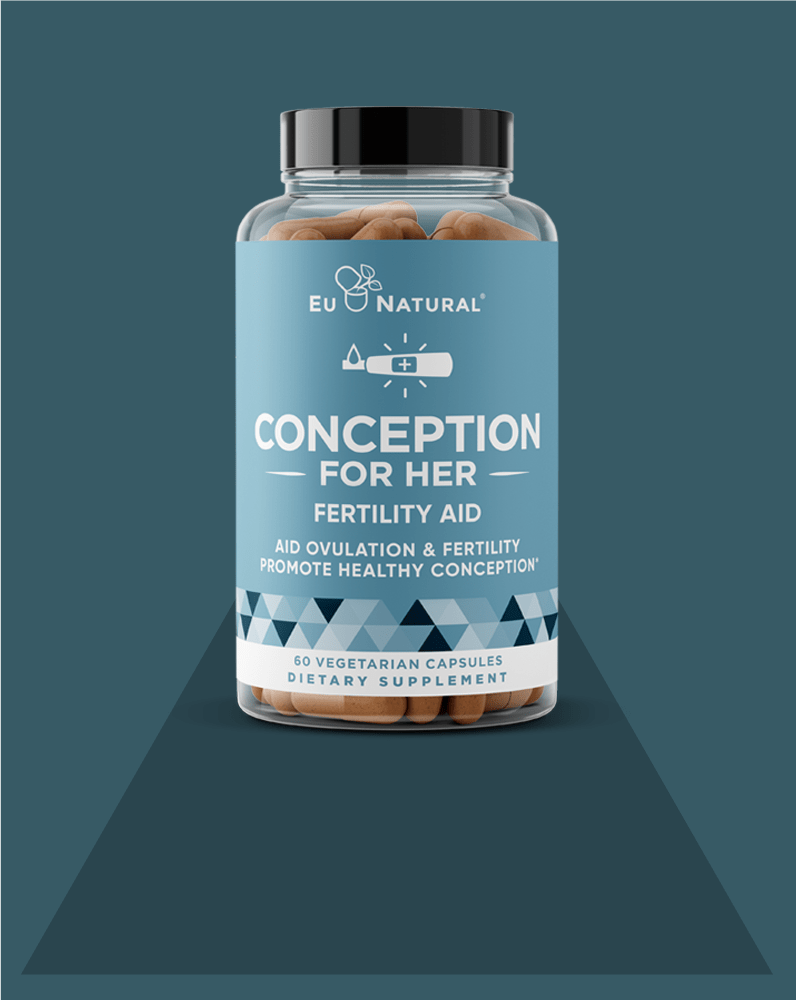
Eu Natural's CONCEPTION line provides evidence-based preconception support formulated by a scientific advisory board, designed for the demographic reality of modern family planning timelines. The formulas include bioavailable methylfolate (not synthetic folic acid), CoQ10 for cellular energy, chelated minerals for improved absorption, and targeted nutrients addressing both female and male fertility factors.
Learn About CONCEPTION for Her | Learn About CONCEPTION for Him
Sources
1. United Nations, Department of Economic and Social Affairs, Population Division (2024). World Fertility 2024.
2. CDC National Vital Statistics Reports (2025). "Births: Final Data for 2023."
3. World Bank Open Data. "Fertility rate, total (births per woman)."
4. Pew Research Center (2025). "Parenting in America Today."
5. CDC National Vital Statistics Reports (2025). "Mean Age of Mothers is on the Rise: United States, 2000-2024."
6. American Society for Reproductive Medicine (2023). "Age and Fertility: A Guide for Patients."
7. Vujkovic, M., et al. (2010). "The preconception Mediterranean dietary pattern in couples undergoing in vitro fertilization/intracytoplasmic sperm injection treatment increases the chance of pregnancy." Fertility and Sterility, 94(6), 2096-2101.
8. Karayiannis, D., et al. (2018). "Adherence to the Mediterranean diet and IVF success rate among non-obese women." Human Reproduction, 33(3), 494-502.
9. Greenberg, J. A., et al. (2011). "Folic acid supplementation and pregnancy: more than just neural tube defect prevention." Reviews in Obstetrics and Gynecology, 4(2), 52–59.
10. Meng, X., Zhang, J., Wan, Q., et al. (2023). "Influence of Vitamin D supplementation on reproductive outcomes of infertile patients: a systematic review and meta-analysis." Reproductive Biology and Endocrinology, 21(1), 17.
11. Paffoni, A., et al. (2014). "Vitamin D deficiency and infertility: a systematic review." Journal of Clinical Endocrinology & Metabolism, 99(11), E2372-E2378.
12. Unfer, V., et al. (2017). "Myo-inositol effects in women with PCOS: a meta-analysis of randomized controlled trials." Endocrine Connections, 6(8), 647-658.
13.Agarwal, A., et al. (2015). "A unique view on male infertility around the globe." Reproductive Biology and Endocrinology, 13(1), 37.
14. First Five Years Fund (Feb 2022). "Child Care Prices Rose Significantly in 2020, Continuing Decades-Long Trend of Major Annual Increases."
15.National Center for Education Statistics (2024). "Degrees Conferred by Sex and Race."
16. Endocrine Society (2020). "Endocrine-Disrupting Chemicals (EDCs)."
17. U.S. Department of Agriculture (2017). "Expenditures on Children by Families, 2015." (Inflation-adjusted data).
18. Lynch, C. D., et al. (2014). "Stress and fertility: a review." Current Opinion in Obstetrics and Gynecology, 26(3), 185-189.


